The $4/hr Trap: Why “Saving Money” on VAs Might Be Costing More Than You Think
A few months back, someone asked me for help to find a VA. After figuring out her needs, I shared a custom rec and pricing for a well-managed, high-performing team member.
The next day, she emailed:
“I found a company that gave me two VAs for less than what you charge for one, plus a free month of content.”
Umm ok.
I won’t hold my breath to see how that turns out.
Look on paper, this may sound like a great deal…
But here’s the thing: based on that rate, those VAs are making under $4 an hour and that’s a big problem.
This is something we see all the time.
We call it “The $4/hr Trap.”
At first glance, it looks like a smart, scrappy move: more hands, less cost. But under the hood, it often leads to more turnover, missed outcomes, and time spent managing what you thought you were outsourcing.
Here’s why.
1. The Brain Science Behind Low Wages
There’s something called the Cognitive Load of Poverty, which is backed by research.
When someone’s under constant financial stress, their executive function (decision-making, focus, working memory) literally drops by up to 13 IQ points.
That’s not a dig… it’s human biology. Stress hijacks the brain.

So when someone is trying to survive on $3–4/hour, you’re not getting their full capacity. You’re getting survival mode. And no amount of SOPs can compensate for that.
2. You’re Not Getting Their Full Focus
Here’s a not-so-fun fact about ultra-low VA rates:
At $4/hour, they can’t afford to work only for you.
Most end up juggling multiple clients, which means your work is being squeezed between other tasks.
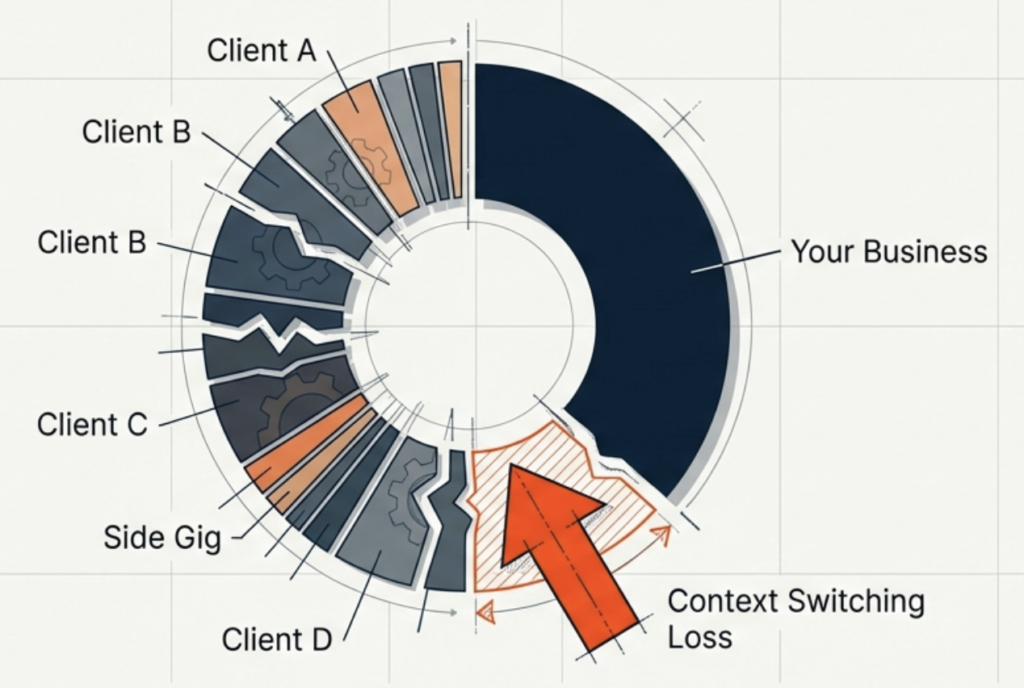
Research shows context-switching cuts productivity by up to 40%. So you’re not just underpaying — you’re getting partial attention on top of it.
3. “Two VAs for the Price of One” Isn’t Always a Bargain
It’s a great offer: “Get two team members instead of one!”
But let’s break it down with a simple analogy:
Imagine someone offers you two clunky Chinese cars from Amazon with overheating engines and no AC…
Or one reliable Honda that gets you there every time.
That’s what managing undertrained or overextended team members can feel like.
You don’t just inherit their work. You inherit the problems, too.
4. The Real Cost Isn’t Money — It’s Time and Momentum
Here’s what tends to happen when businesses hire based on the lowest possible rate:
- They lose weeks or months trying to get someone up to speed
- They spend hours managing or redoing work
- They face costly turnover when the person burns out or disappears
Then they start over.
Again.
And again.

What’s Working Instead?
We’ve seen the difference when clients shift the lens from “cost-per-hour” to value-per-outcome.
They pay a living wage, which leads to long-term retention, better focus, and higher-quality work.
- They pay a living wage, which leads to long-term retention, better focus, and higher-quality work. This is the foundation of how to scale your business with international virtual assistants without the typical headaches of high turnover.
- They use structured systems like morning huddles and EOD reports, which create accountability and clarity on both sides.
- And most importantly, they stop tracking hours… and start tracking results.
It’s not really about being generous or altruistic…
It’s just a better investment.